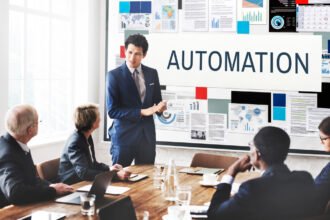

The rapid adoption of artificial intelligence is pushing businesses to reconsider the skills required across their workforce. Instead of focusing exclusively on technical expertise, organizations are increasingly looking for employees who can combine industry knowledge with AI literacy, critical thinking, and problem-solving abilities.
AI is changing tasks across finance, marketing, customer service, software development, sales, and operations. Employees are increasingly expected to work alongside intelligent tools rather than perform every task manually.
Businesses are responding with internal training programs designed to improve AI adoption and productivity. Upskilling existing employees can also help companies reduce hiring pressures while retaining valuable institutional knowledge.
Leadership teams are paying greater attention to how AI affects job roles rather than simply measuring the number of AI tools deployed. Successful transformation requires employees to understand when and how AI should be used.
Human skills remain equally important. Creativity, communication, judgment, leadership, and relationship-building continue to play a critical role in business decision-making.
Organizations that invest in workforce transformation alongside technology adoption may be better positioned to capture the productivity benefits of AI.
The future workplace is likely to be defined not by humans versus AI, but by organizations that successfully combine human expertise with intelligent technology.