
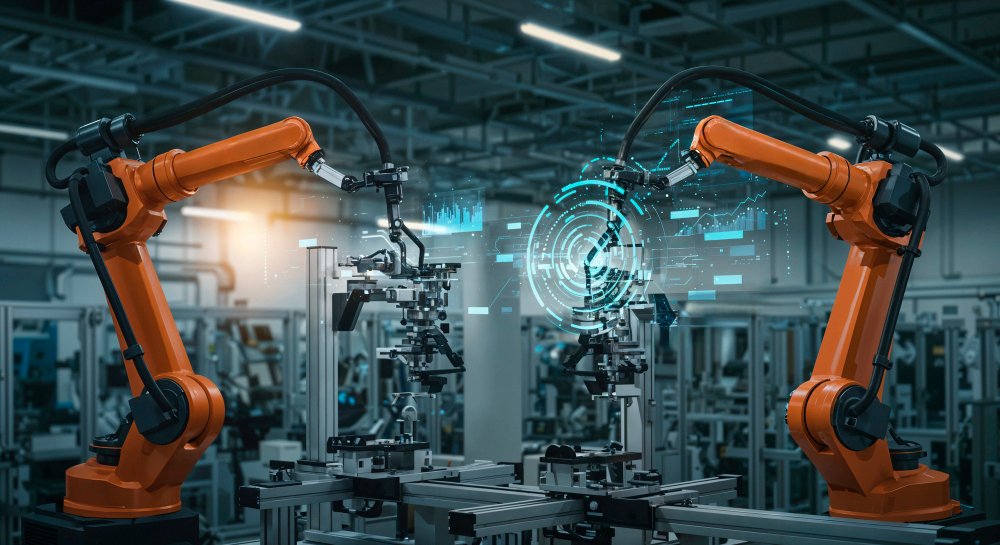
Robotics is moving beyond traditional manufacturing environments as advances in artificial intelligence, computer vision, and sensors enable machines to perform increasingly complex tasks. Businesses across logistics, healthcare, agriculture, retail, and hospitality are exploring robots to improve efficiency and address labor-intensive processes.
Modern robots can navigate dynamic environments, identify objects, interpret instructions, and collaborate with human workers. AI-powered vision systems are also helping machines make decisions in real time instead of relying solely on pre-programmed instructions.
Warehouses are among the fastest-growing areas for robotics adoption. Companies are deploying autonomous mobile robots to transport inventory, sort packages, and optimize fulfillment operations. Healthcare organizations are also exploring robotic systems for surgery assistance, rehabilitation, and hospital logistics.
The combination of robotics and generative AI could further accelerate adoption. Natural-language interfaces can make it easier for workers to communicate with machines and configure automated workflows.
However, businesses must address implementation costs, workforce training, safety requirements, and integration with existing systems.
As robotics technology becomes more affordable and intelligent, autonomous machines are expected to become increasingly common across commercial environments.