
If you’ve sat through a software demo in the last six months, you’ve heard the word “agentic” about forty times.
Agentic ERP. Agentic finance. Agentic workflows. Agentic everything.
And if you nodded along while quietly wondering what the difference is between an “agent” and the chatbot your vendor sold you last year, you’re in very good company. So let’s break it down in plain English, because this shift is real, and it’s going to change how a lot of teams work over the next few years.
First, the big number.
Gartner projects that spending on ERP software with agentic capabilities will reach $72 billion by 2030. That’s a five-year compound annual growth rate of roughly 74.6%. Whatever you think about AI hype, that’s a lot of money moving in one direction.
So what is an agent, really?
Think about the AI tools most of us have used so far as copilots. You ask, they answer. You give them a draft, they polish it. They suggest; you do. The human is still the one clicking the button.
An agent is different. An agent is given a goal and a set of rules, and it takes actions on its own to reach that goal. It can look up data, make a decision within guardrails, trigger a transaction, and move on to the next task. The human shifts from doer to reviewer.
Here’s a simple way to picture it.
Copilot version: Your AP clerk opens a vendor invoice. The AI highlights that the amount doesn’t match the purchase order and suggests a reason. The clerk investigates and fixes it.
Agent version: The AI receives the invoice, matches it against the PO and the goods receipt, notices a small mismatch within an approved tolerance, approves it, logs the reason, and flags only the genuinely weird exceptions for a human. The clerk spends their day on the five invoices that actually need judgment instead of the five hundred that don’t.
That’s the promise. And for anyone who has worked in finance, procurement, or supply chain, you can feel how big that is.
But here’s where we want to be honest with you.
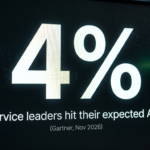
The analyst community is not all singing the same tune. Constellation Research has made the point that you can’t just slap an agent onto your core system and expect a smooth AI-enabled ERP without glitches. Forrester’s predictions for 2027 are even more cautious: they expect fewer than 10% of enterprises to be using autonomous agents across applications.
So we’ve got a massive spending forecast on one side, and a lot of caution about real-world adoption on the other. Both can be true. Money will flow into agentic features because vendors are building them into everything. Whether those features actually run autonomously inside your business is a different question, and that one depends on you.
Let’s talk about what makes a company ready.
Your processes need to be clear enough to write down as rules. Agents work within guardrails. If your approval logic lives in one person’s head (“oh, we always let that vendor slide because of the history”), an agent can’t follow it. Documenting the actual rules is step one.
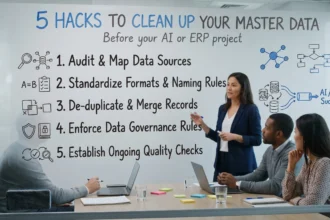
Your data needs to be consistent. An agent matching invoices to POs is only as good as the vendor master, the item master, and the pricing data it reads. Duplicate vendors, outdated prices, or mismatched units of measure will create a flood of false exceptions. Or worse, false approvals.
You need governance before autonomy. Who reviews what the agent did? What’s the dollar threshold above which a human must approve? How do you audit decisions after the fact? Forrester predicts half of enterprise ERP vendors will launch autonomous governance modules. That tells you the industry knows governance is the missing piece.
And your people need to understand their new role. When agents take over the repetitive work, roles shift toward exception handling, analysis, and supplier relationships. That’s a better job for most people, but only if you talk to them about it early and honestly. Silence breeds fear, and fear kills adoption.
So where should most teams start?
Look for high-volume, rules-based, low-risk tasks. Classic candidates include:
– Three-way invoice matching within tolerance
– Routine purchase order creation for repeat items
– Inventory reorder suggestions based on clear min/max rules
– Expense report policy checks
– Bank reconciliation for standard transactions
These have clear rules, plenty of volume to justify the effort, and limited downside if something goes slightly wrong, because a human is still reviewing exceptions.
A quick word on cost, too.
Constellation Research expects “agentic enterprise license agreements” to become the norm as executives push back on unpredictable AI pricing. Forrester goes further and predicts AI consumption pricing will backfire for three of the biggest business-app vendors in 2027. Translation: before you sign anything, ask exactly how agent activity is billed. Per action? Per user? Per outcome? A cheap pilot can turn into an expensive surprise when an agent starts processing thousands of transactions a day. Get the pricing model in writing, model it at full volume, and negotiate caps early while you still have leverage.
What to avoid at first: anything involving judgment-heavy decisions, large dollar amounts, or sensitive relationships. Credit decisions for strategic customers. Contract terms. Workforce planning. Keep humans firmly in charge there for now.
The bigger picture.
Agentic ERP isn’t about replacing your finance or operations team. It’s about changing the shape of their work. Less keying and checking. More deciding and improving. The companies that benefit most won’t be the ones who buy the flashiest agent. They’ll be the ones who did the groundwork: clean data, documented processes, sensible governance, and people who trust the system.
That’s the kind of practical, beneath-the-buzzword thinking we try to bring you at B2B Flux every week. We follow the analyst reports, the vendor announcements, and the real conversations so you can make smarter calls without wading through a hundred press releases.
Your takeaway: Before your next ERP vendor demo, write down three processes you’d consider handing to an agent. For each, ask: Are the rules written down? Is the data clean? Who reviews the outcome? If you get stuck on any of those, that’s your real project.
Now we want to hear from you. Which ERP task would you trust an AI agent to handle on its own first: invoice matching, purchase orders, inventory reorders, or none yet? Tell us why in the comments.